

Scientific innovation drives ophthalmology forward, but groundbreaking therapies only reach patients through well-executed clinical research. Behind every successful ophthalmology clinical trial is a clinical operations strategy designed specifically for the unique demands of vision research.
Unlike many therapeutic areas, ophthalmology studies require highly specialized operational oversight. Success depends not only on protocol execution, but on coordinating advanced ocular imaging, standardized visual function testing, surgical procedures, certified equipment, and experienced investigative sites. Every operational decision has the potential to influence data quality, endpoint reliability, and ultimately regulatory success.
Whether evaluating treatments for retinal disease, glaucoma, dry eye disease, geographic atrophy, inherited retinal disorders, or emerging gene and cell therapies, ophthalmology trials involve complex assessments that require exceptional consistency across every study site. Variability in OCT imaging, fundus photography, visual acuity testing, intraocular pressure measurements, or endpoint interpretation can introduce unnecessary risk if operational processes are not carefully managed.
This is where specialized clinical operations becomes a competitive advantage.
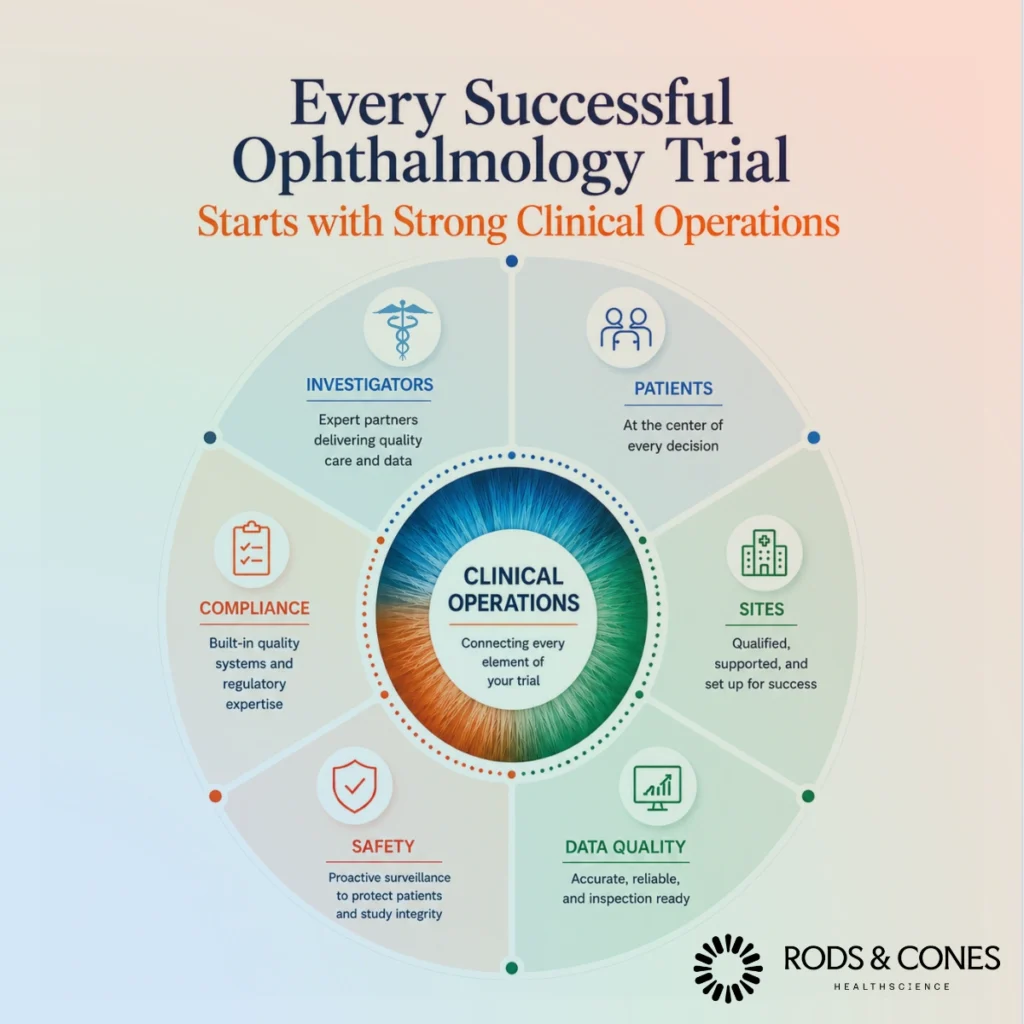
Strong ophthalmology clinical operations begin with selecting investigators and research sites that possess both therapeutic expertise and the equipment, staffing, and patient populations needed to execute complex protocols. Site qualification goes beyond enrollment potential. It includes evaluating imaging capabilities, surgical experience, certification requirements, workflow efficiency, and readiness to meet increasingly sophisticated protocol demands.
Operational excellence continues throughout the study lifecycle. Project management, site monitoring, regulatory support, safety oversight, data management, quality assurance, and vendor coordination must work together seamlessly to maintain protocol compliance while minimizing variability across sites. Consistent communication and proactive issue management help reduce delays, improve data quality, and keep studies inspection ready from initiation through closeout.
Patient experience is equally important. Many ophthalmology trials require frequent clinic visits, multiple imaging procedures, functional vision assessments, or extended follow-up periods. Well-organized study operations help reduce site burden while creating a more efficient and positive experience for participants, supporting both retention and protocol adherence.
As ophthalmology research continues to evolve, clinical trials are becoming increasingly complex. Advanced biologics, sustained-release therapies, minimally invasive surgical devices, and artificial intelligence-enabled diagnostics all introduce new operational considerations. Successfully managing these studies requires clinical operations teams that understand not only research processes but also the unique scientific, technical, and logistical challenges specific to ophthalmology.
At Rods & Cones HealthScience, ophthalmology is our exclusive focus. Our clinical operations teams understand the nuances of ophthalmic research because this is the therapeutic area we serve every day. From site identification and study startup through monitoring, quality oversight, and regulatory support, we help sponsors execute efficient, compliant, and high-quality studies designed to generate reliable clinical evidence.
Clinical operations is far more than administrative support. In ophthalmology, it is the infrastructure that transforms innovative science into credible clinical data, regulatory confidence, and ultimately new therapies that preserve and restore vision.
